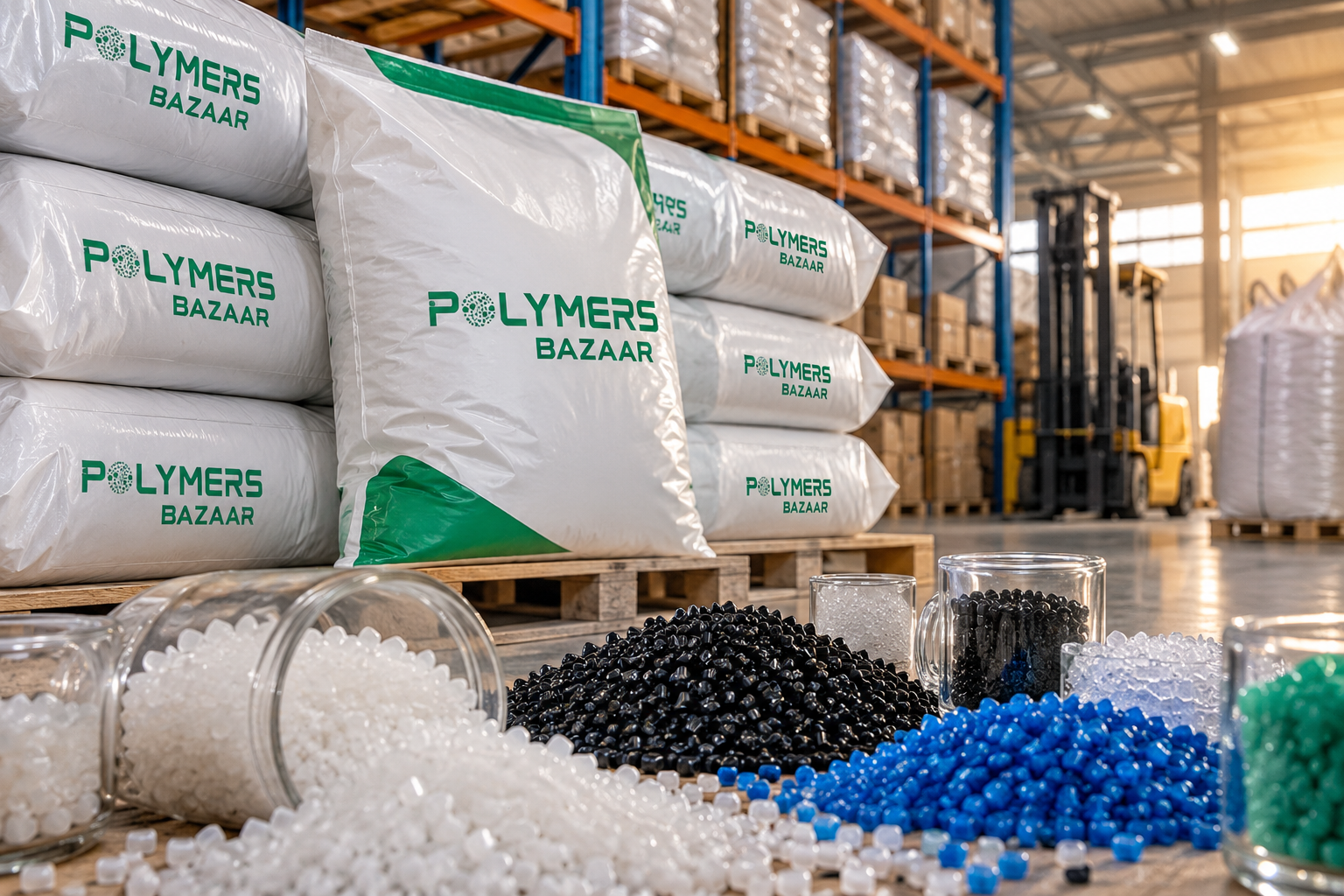
What is a B2B Polymer Marketplace?
A B2B
polymer marketplace is a digital platform that connects verified polymer
buyers and sellers, such as manufacturers, traders, distributors, and
stockists, so they can source, sell, and manage polymer transactions in one
place. Instead of negotiating deals over calls with unknown counterparties,
buyers and sellers register, get verified, and transact through the platform's
structured process.
Why a Dedicated Polymer Marketplace Matters in India
India's plastics market was valued at USD
46.77 billion in 2025 and is projected to reach nearly USD 80 billion by 2034.
Around 85 to 90 percent of processing units in the country are small and medium
enterprises, which usually don't have dedicated procurement teams or strong
negotiating leverage. Domestic polymer supply is also still catching up with
demand, with projects like Reliance's and Adani's new PVC complexes expected to
close a 2.5 million tonne local supply gap only by 2027. In that kind of
environment, having a reliable way to find verified counterparties and compare
prices genuinely helps.
How These Marketplaces Work
Most platforms follow a similar
structure:
●
KYC verification for every buyer and seller before they can transact, usually involving
GST and PAN details.
●
RFQs (Request for Quotation), where a buyer posts a requirement and multiple verified sellers
respond, or the buyer browses listed offers directly.
●
Platform-mediated deals, meaning negotiations and transactions happen through the platform
rather than directly between parties.
●
Managed logistics, where the platform coordinates pickup and delivery.
●
Bank-transfer-only payments, typically via RTGS, NEFT, or IMPS, for traceability.
Some platforms, including Polymers
Bazaar, also offer credit-based buying, letting buyers purchase now and pay
later to ease working capital pressure.
Key Factors to Consider
- Coverage. Some platforms are pan-India,
others are regional. Polymers Bazaar, for example, currently focuses on West
Bengal, so check whether a platform actually serves your location before
registering.
- Grade and
product range. Confirm the platform actually
lists the specific grades you need, whether that's HDPE, LDPE, PP, PVC,
ABS, PET, or reprocessed polymers.
- Payment
and credit terms. If cash flow is tight, a
platform offering credit-based buying can matter more than a slightly
lower listed price.
- Verification
depth. Mandatory KYC and GST checks reduce the
risk of dealing with unreliable counterparties.
- Logistics support. End-to-end managed
logistics removes a major coordination burden, especially for smaller
buyers without their own transport network.
Common Mistakes
●
Skipping verification steps or
trying to deal outside the platform. This usually
violates platform terms and risks account suspension.
●
Assuming every platform covers
your region or product grade. Marketing language can
sound pan-India even when the actual network is regional.
●
Ignoring cancellation and
payment terms. Cancellations often carry charges
depending on order stage, and payments are typically restricted to bank
transfers only.
●
Chasing the lowest listed price
alone. A cheaper price means little if logistics are
unreliable or the seller isn't properly verified.
Practical Example
Say a small converter in Kolkata needs PP
injection grade resin. Instead of calling around, they register on a regional
marketplace, complete KYC, and post an RFQ. Multiple verified sellers respond
with quotes, the converter compares them, and the order is placed through the
platform, with logistics and payment handled within the system. This is
illustrative, not a real case, but it reflects the actual RFQ-to-delivery flow
these platforms use.
Key Takeaways
●
Match the platform's region and
product coverage to your actual needs before registering.
●
Mandatory KYC and
platform-mediated deals exist to protect both sides, not to slow you down.
●
Credit terms and logistics support
can matter as much as price.
●
Read cancellation and payment
policies before your first transaction.
Conclusion
A B2B
polymer marketplace won't fix every sourcing challenge, but it does bring
structure to a process that's often informal and risky. The right platform for
you depends on your region, the grades you trade, and how much you value credit
and managed logistics over raw price. I hope this gives you a clearer, more
grounded way to evaluate your options rather than just picking the first
platform you find.