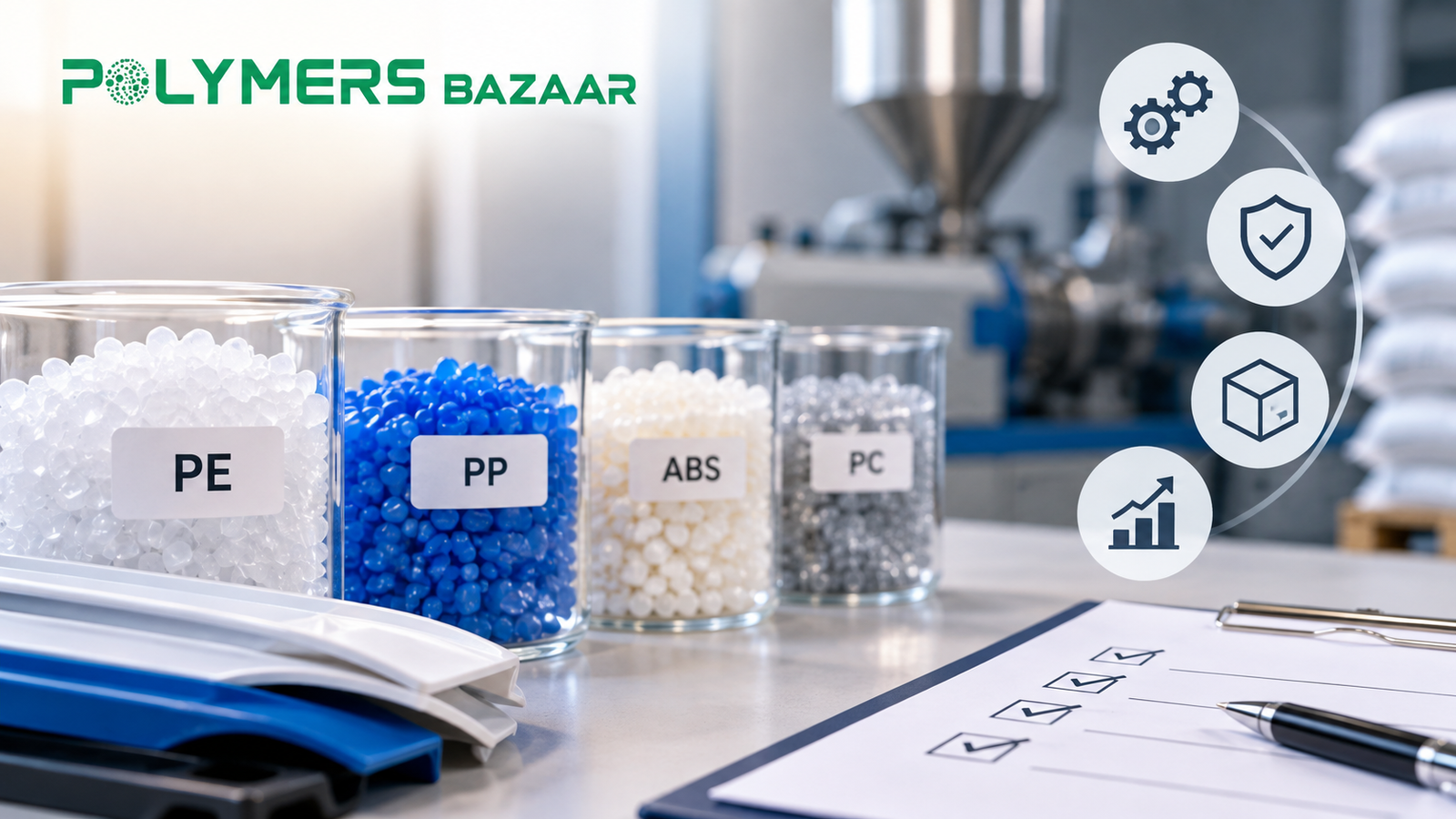
Why Choosing the Right Polymer Grade Matters
When buying polymers for manufacturing,
it is easy to focus on price, availability, or payment terms. In my experience,
however, one detail deserves attention before all three: choosing the right
polymer grade.
Two materials may belong to the same
polymer family but behave very differently during processing and in the
finished product. The correct grade can help maintain production consistency,
while the wrong one can create avoidable problems.
What Is a Polymer Grade?
A polymer grade is a specific resin
specification designed to provide particular processing and performance
characteristics. Depending on the grade, properties such as melt flow rate,
density, stiffness, impact resistance, tensile strength, and thermal
performance can vary.
Manufacturers develop different grades
for processes such as injection moulding, blow moulding, film extrusion, and
other applications. This is why selecting a grade should start with the product
and manufacturing process, not simply the polymer name.
Why the Right Polymer Grade Matters
The grade influences both how easily the
material can be processed and how the final product performs.
For example, melt flow rate affects how a
polymer flows during processing. A grade suitable for one application may not
provide the melt strength or flow characteristics required for another.
The final product also needs to meet
specific requirements. Packaging film may need a particular balance of
toughness and tear resistance, while a rigid moulded component may require
greater stiffness and impact resistance.
Choosing the right grade therefore helps
manufacturers avoid unnecessary machine adjustments, production problems, and
product rejection.
What to Check Before Selecting a Polymer Grade
1. End-Use Application
Start by defining what you are
manufacturing. A polymer intended for packaging film may have very different
requirements from one used for injection-moulded components.
Be specific about the application when
requesting a quotation from a supplier.
2. Melt Flow Index or Melt Flow Rate
MFI or MFR is one of the commonly
referenced properties when selecting thermoplastics. It provides useful
information about melt flow under specified test conditions.
But it should not be considered in isolation.
The correct value depends on the processing method and product requirements.
3. Mechanical and Thermal Properties
Check properties such as:
●
Tensile strength
●
Impact resistance
●
Stiffness
●
Tear strength
●
Melting point
●
Heat resistance
The important properties will depend on
what the finished product needs to withstand.
4. Additives and Specifications
Some polymer grades contain additives or
are formulated for specific performance requirements. Always check the
manufacturer's technical data sheet and confirm whether the grade meets the
specifications required for your application.
For products subject to particular Indian
standards or regulatory requirements, verify the relevant requirements before
purchasing.
5. Availability and Supply Consistency
A technically suitable grade is only
useful if you can source it consistently. For regular production, consider
supplier reliability, stock availability, lead times, and whether the same
specification can be maintained across future purchases.
What Happens When You Choose the Wrong Polymer Grade?
The consequences can go beyond a
technical inconvenience.
A material that does not match the
processing requirements may cause difficulties during production. The finished
product may also fail to deliver the expected strength, flexibility,
appearance, or durability.
This is why I would not recommend
comparing polymer quotations on price per kilogram alone. A lower material
price does not necessarily mean a lower overall production cost if the grade
creates additional scrap or quality problems.
How Indian Polymer Buyers Can Choose With Confidence
A simple approach is to create a
specification checklist before asking suppliers for prices:
- Define the end product and application.
- Identify the
manufacturing process.
- Determine
the required MFI/MFR range.
- List the
important mechanical and thermal properties.
- Check
additives, certifications, and applicable standards.
- Compare suppliers based on both technical suitability and
commercial terms.
Platforms such as Polymers Bazaar can
make supplier comparison easier by allowing buyers to compare available polymer
offers and connect with sellers.
Buying Polymers on Credit in India: Why Grade Selection Still
Comes First
Credit can be useful for managing working
capital, particularly when manufacturers need to purchase raw materials for
ongoing production. However, financing should not influence the technical
choice of material.
If you buy polymers
on credit in India, the same rule applies: confirm the grade
first, then evaluate the price, supplier, payment terms, and credit options.
The objective is not simply to purchase
polymer. It is to purchase the right polymer for the job.
Common Mistakes to Avoid
●
Choosing the cheapest available
grade without checking specifications.
●
Assuming all grades within the
same polymer family are interchangeable.
●
Looking at MFI/MFR without
considering the complete application.
●
Ignoring additives and regulatory
requirements.
●
Failing to confirm material
availability for repeat orders.
Key Takeaways
●
Start with the application and
processing method.
●
Compare technical data sheets
before comparing prices.
●
Consider MFI/MFR along with
mechanical and thermal properties.
●
Check specifications and
applicable standards.
●
Evaluate supply consistency for
repeat production.
●
Credit can support procurement,
but it should never replace proper grade selection.
Conclusion
Choosing a polymer grade is a technical
purchasing decision, not just a price comparison. The right grade can support
smoother processing and consistent product performance, while the wrong one can
create costs that are difficult to see when placing the original order.
Whether you purchase with immediate
payment or buy polymers on credit in India, take the time to confirm the grade
before finalising the deal. A few minutes spent checking specifications can
prevent much bigger production problems later.
FAQs
What is a polymer grade?
A polymer grade is a specific resin specification
designed for particular processing and performance requirements.
Why is polymer grade selection
important?
Different grades can have different flow, strength,
stiffness, impact, and thermal characteristics. The correct grade helps match
the material to both the manufacturing process and final application.
Does MFI determine polymer quality?
No. MFI/MFR is an important selection parameter, but
it should be evaluated alongside other material properties and the intended
application.
Can two grades of the same polymer be
substituted?
Not automatically. Their processing and performance
characteristics may differ, so technical specifications should be compared
before making a substitution.
What should I check before buying
polymers?
Check the application, processing method, MFI/MFR,
mechanical and thermal properties, additives, specifications, availability, and
supplier reliability.
Should I choose polymer based only on
price?
No. A lower-priced grade may not meet your processing
or product requirements and could increase waste or quality-related costs.
Can I buy polymers on credit in India?
Credit options may be available to eligible buyers
through polymer marketplaces and suppliers, subject to their respective
assessment and approval terms.
Where can Indian buyers compare
polymer suppliers?
Online polymer marketplaces can help buyers compare
available materials, suppliers, and commercial offers before making a purchase.